Thomas Oh
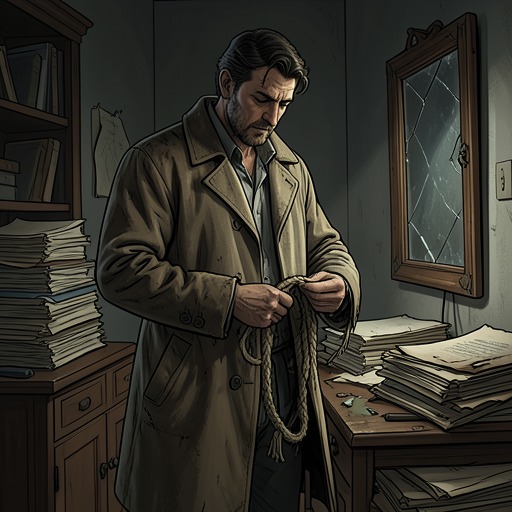
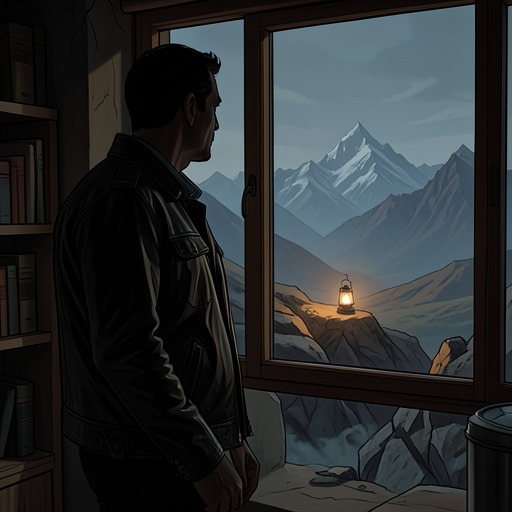
The Legend of William OhThomas Oh is an absent but decisive figure in William Oh’s story: a former Climber whose disappearance leaves behind not only a missing parent, but also a direction of inquiry. Through Gertrude’s account, Thomas is identified as one of the rare Climbers who continued upward because the challenge and mystery of The Tower mattered more than money, power, or the security of a self-made kingdom. His unresolved fate turns William’s family history into part of the Tower’s larger enigma.
Identity and Background
Gertrude places Thomas and Mary Oh within her own history as a Climber. She recalls reaching the Twelfth Floor and encountering people whose lives divided into two broad patterns. Some Climbers pursued wealth and authority, eventually stopping somewhere between the Eighth and Fifteenth Floors after carving out small kingdoms for themselves. Thomas and Mary belonged to the other kind: those who became addicted to the challenge itself and to uncovering the mystery of The Tower.
This distinction defines Thomas more sharply than any profession or title. The evidence does not present him as a conventional ruler, merchant, or adventurer seeking a fixed reward. Instead, he is part of a pair driven onward by questions that ordinary success could not settle. Gertrude describes the Tower as containing vestiges of an unknown past, remnants capable of casting doubt on everything people believe they know. Thomas’s significance therefore lies in his orientation toward discovery: he kept climbing because the world above threatened the explanations available below.
The Mystery That Drove Him
The mystery Thomas pursued is not abstract folklore. Gertrude recounts that someone discovered ruins whose outline matched the layout of his hometown exactly, including the location of his father’s bakery. Will tries to reduce the resemblance to coincidence or illusion, but Gertrude refuses to dismiss it. Her experience of too many strange coincidences has made her distrust easy explanations, and she connects that uncertainty directly to Thomas and Mary’s decision to continue.
For Thomas, the Tower’s unanswered questions became a persistent pressure rather than a single puzzle to solve. Gertrude describes those questions as nagging and haunting, suggesting that the search worked on the Climbers psychologically as well as intellectually. The Tower did not merely offer unexplored territory; it challenged the reliability of memory, geography, history, and common sense. Thomas’s upward movement thus represents a willingness to sacrifice ordinary certainty for the possibility of a larger truth.
Disappearance and Family Consequences
Thomas did not return with Mary. Gertrude says that if they ever came back, they could shed more light on the mystery of The Tower than any other Climber, living or dead, but she immediately adds that she would not hold out hope. The conditional phrasing preserves a narrow possibility while making their absence the practical reality. Thomas is alive in the narrative primarily as someone who is gone, and the lack of a confirmed return prevents his history from becoming a completed heroic legend.
His disappearance also shapes William’s childhood and self-understanding. Thomas is not introduced through direct action in the present but through the testimony of Gertrude and the reactions of people who recognize the family name. The missing father’s legacy reaches William as rumor, warning, and inheritance at once. William must decide what kind of Climber he wants to become, and that question is inseparable from the path Thomas and Mary chose before him.
Reputation and the Name of William Oh
Thomas’s name continues to circulate even when his personal history remains obscure. Jason Salazar uses the story of William Oh’s supposed origin as a publicity claim: he says that William was born on the Hundredth Floor and bathed in lethal Miasma, granting him abilities beyond human comprehension. When a listener questions the impossibility of a pregnant woman reaching that height, Jason identifies the parents as Mary and Thomas Oh. The listener’s sudden paling and departure shows that the names carry a significance Jason himself may not fully understand.
This episode makes Thomas part of a wider system of unreliable public narration. Jason’s hype turns William’s lineage into marketable legend, while the reaction to Thomas’s name implies that the family’s history may contain a reality more dangerous than the exaggeration. Later, a clerk tells William that he is the sixth person named William Oh to appear, though the System identifies him as the correct one. The proliferation of false or competing identities further separates Thomas’s actual legacy from the stories attached to it.
Legacy and Narrative Role
Thomas functions as both absent parent and threshold into the Tower’s central mystery. His example gives William a family precedent for climbing beyond the safe limits of ambition, but it also carries a warning: the pursuit of knowledge can lead beyond the point from which a person can return. Gertrude’s account contrasts the small kingdoms built by Climbers seeking money and power with the more dangerous compulsion that drove Thomas and Mary onward.
The public mythology surrounding William also transforms Thomas into an unseen source of suspense. Stories about William’s lightning abilities, his missing hand, and impossible feats spread through inns, while the factual information available about Thomas remains painfully limited. That imbalance is significant: the son’s reputation expands through hearsay as the father’s truth recedes into absence. Thomas therefore anchors the book’s tension between legend and evidence, between the stories people tell about The Tower and the fragments that might actually explain it.
Thomas’s ending is unresolved. The available account confirms neither his death nor his return, and Gertrude’s lack of hope is the strongest practical judgment offered. What remains certain is his influence: Thomas and Mary pursued the Tower’s deepest questions, vanished while doing so, and left William facing the same choice about whether climbing is a route to power or an addiction to mystery. In that sense, Thomas’s absence is not a blank space in the narrative. It is the unanswered question that keeps the family, and William’s future, pointed upward.